
Summary
Forty to sixty years of reliable service life. That is what a properly installed standing seam metal roof can deliver on a commercial building in Northeast Florida, and it is a number that changes how the whole investment conversation goes. This guide covers how the system actually works, how the numbers compare to membrane alternatives when you look beyond the initial quote, and why Jacksonville commercial property owners are choosing metal at a rate that was not happening ten years ago.
Everything You Need to Know About Standing Seam Metal Roofing Before You Invest
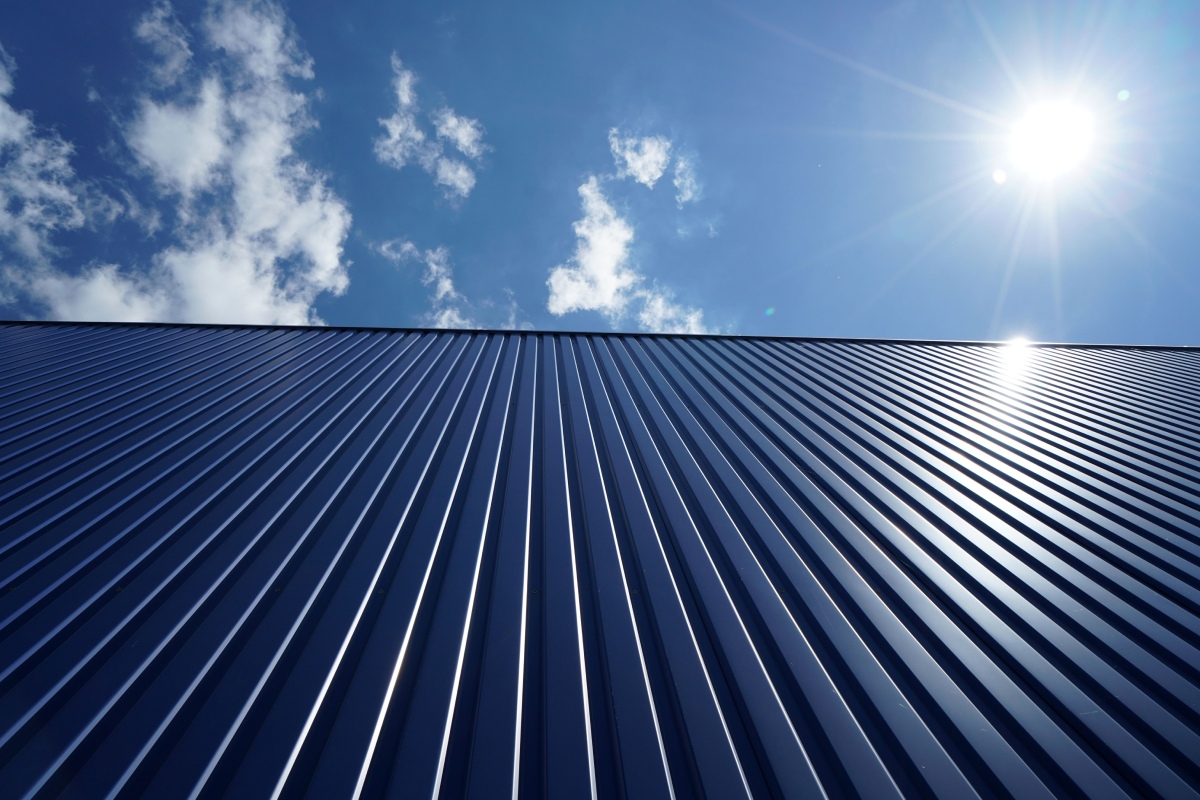
The name tells you something useful. Standing seam refers to those vertical ridges that run the length of each panel and lock together above the panel surface. That raised seam is doing real work. It sheds water away from any horizontal joint, and because the panels connect at the seam rather than through the face, there are no exposed fasteners on the panel surface at all.
Compare that to exposed-fastener metal roofing, where screws go directly through the panel. Every one of those screw penetrations has a rubber washer behind it. Over time, those washers compress, crack, dry out in Florida heat, and start letting water in. On a large commercial roof with thousands of fasteners, that is a lot of potential failure points working against you simultaneously. Standing seam eliminates that entire category of problem.
Panel material is where the coastal location question comes in. Galvalume-coated steel is the standard for most commercial applications in Florida, and it holds up well in most of the Jacksonville market. Get closer to the water, though, and the salt air calculus changes. Jacksonville Beach, Atlantic Beach, Fernandina Beach, areas where salt air is a daily reality rather than an occasional visitor, those are places where aluminum panels earn their premium. Aluminum does not rust. Period. Steel with even a compromised coating eventually will.
PVDF paint systems are the other piece of this. They are what keep a metal roof looking the way it looked when it was installed, not chalked out and faded five years later. Florida’s UV intensity is brutal on exterior coatings, and a cheap paint system on metal panels will show it. PVDF-finished panels are rated to hold color for decades, which matters both aesthetically and for the long-term integrity of the protective coating over the metal beneath.
Seam height is a spec detail that gets overlooked in a lot of commercial buying conversations. Taller seams perform better under the kind of wind-driven rain that Northeast Florida sees during hurricane season. The uplift forces that concentrate at panel edges during high-wind events are also better handled by taller seam profiles. If you are getting proposals for a standing seam system, ask specifically about seam height and what uplift rating the proposed system carries.
One thing that almost never comes up until it is too late: the insulation assembly under the panels. Standing seam metal is not self-insulating. The thermal performance of the whole roof system depends on what is below the panels, and a well-designed insulation assembly can meaningfully cut the HVAC load in a building that runs air conditioning eleven months a year. Do not let that conversation get skipped in the design phase.
In-house sheet metal fabrication is worth asking about when you are evaluating contractors. Flashings, coping, edge metal, and drainage transitions that are custom-fabricated for your specific building fit differently than stock components. Tighter fits mean fewer long-term vulnerabilities at the details, and the details are where most metal roof problems eventually originate.
- No exposed fasteners on the panel surface means no washer-failure leak risk over time
- Aluminum panels are the right call for buildings with sustained salt air exposure along the coast
- PVDF finish systems hold color and protect the underlying metal through decades of Florida UV
- Seam height affects both water-shedding and wind uplift performance, ask for the rated spec
- The insulation assembly under the panels controls thermal performance, not the metal itself
| Panel Material | Best Application | Corrosion Resistance | Typical Life Expectancy |
| Galvalume Steel | Inland commercial buildings | High (Galvalume coating) | 40-60 years |
| Aluminum | Coastal and high-humidity sites | Excellent (no rust) | 40-60 years |
| Copper | Specialty or historic projects | Exceptional (self-healing) | 80+ years |
| Painted Steel (PVDF) | Standard commercial applications | High with quality finish | 40-50 years |
How Standing Seam Metal Roofing Compares to Other Commercial Systems in Cost and Performance
Yes, standing seam costs more upfront than TPO or EPDM. That is just true. The question worth asking is what you are actually comparing when you look at those two numbers side by side.
A quality single-ply membrane system, installed correctly and maintained, gets you somewhere between fifteen and twenty-five years of service life. A standing seam metal roof on a building with compatible slope typically runs forty to sixty. So the property owner who puts metal on today and holds the building for thirty years is buying one roof. The one who goes with TPO is buying two, possibly three, each with its own tear-off cost, disposal cost, installation cost, and the business disruption that comes with a full roof replacement. Do that math with real numbers and the upfront premium on metal looks different.
Ongoing maintenance costs are not the same either. Single-ply systems have seam vulnerabilities, they pick up punctures from rooftop foot traffic, and Florida’s UV environment degrades membrane surfaces faster than in northern climates. Metal panels that are properly installed and detailed correctly have a short list of maintenance concerns: keep the drains and gutters clear, inspect the flashings once a year, and address any sealant deterioration at penetrations before it becomes a leak. That is it for most buildings.
Wind performance is worth a separate discussion because this is Northeast Florida and wind is not theoretical. Standing seam systems tested to FM or UL uplift ratings are engineered to hold against specific wind loads. The concealed clip attachment actually works in the system’s favor here: the clips allow the panels to move thermally without stressing the weather seal, and that movement tolerance also helps under dynamic wind pressure. Single-ply systems with adhesive or mechanically fastened perimeters tend to be more vulnerable at the edges, which is exactly where uplift concentrates.
Energy performance adds another line to the ledger. Light-finish PVDF panels reflect solar radiation rather than absorbing it. In a building that runs air conditioning from March through November, the difference between a reflective metal roof and a dark membrane absorbing heat all day is measurable in the utility bills. Not dramatic on a monthly basis, but real, and it compounds over the decades a metal roof is in service.
- One metal roof installation often covers the same period as two or three single-ply replacement cycles
- Maintenance requirements for metal are fewer and more predictable than for membrane systems
- FM and UL uplift ratings on standing seam systems provide documented wind resistance performance
- Reflective PVDF finishes reduce solar heat gain in buildings that run cooling most of the year
Why More Commercial Properties Are Upgrading to Standing Seam Metal Roof Systems
Something has shifted in how Northeast Florida commercial property owners are thinking about roofing decisions, and it is showing up in the volume of standing seam upgrades happening across the Jacksonville market. A few things are driving it at once.
Insurance is the one that surprises people the most. Some Florida commercial property carriers are now offering lower premiums on buildings with rated metal roofing systems. Others have started declining renewals on properties with older single-ply roofs in certain wind-exposure zones. Property owners who have been on the receiving end of those conversations are running the actual math, and what they find is that the annual premium savings, taken over fifteen or twenty years, can put a meaningful dent in the cost difference between metal and membrane. A few find it closes the gap entirely.
The aesthetics argument has gotten stronger as the product has evolved. Metal roofing in the commercial market used to mean limited choices. Corrugated profiles, a handful of colors, industrial look whether you wanted it or not. That is not what the category looks like today. Modern standing seam systems come in enough panel widths, seam heights, and PVDF color options that architects are specifying them on retail centers and restaurant buildings where the roof is visible from the street and appearance is part of the brand presentation. Tenant attraction and retention respond to that.
Restaurant and hospitality buildings deserve a specific mention because they are a special case. Rooftop grease exposure from kitchen exhaust systems, the constant access for HVAC service, the vibration from mechanical equipment, these are conditions that eat certain membrane systems alive over time. A standing seam roof detailed properly at every penetration and curb flashing handles that environment in ways that most flat-roof alternatives do not.
Contractor availability matters here too, and it did not always. The reason some commercial property owners avoided metal in the past was not the system, it was finding a local contractor who actually knew how to install it and had the fabrication capability to do the details correctly. That has changed in Jacksonville. Certified local contractors with in-house sheet metal fabrication are doing this work, which means the installation quality that makes a metal roof a fifty-year investment is actually accessible. A standing seam system installed by someone without the right experience and tooling is a different conversation entirely.
- Florida insurance carriers are linking premium pricing to roof system type, metal increasingly comes out ahead
- Modern panel profiles and color options make standing seam viable for retail and restaurant buildings
- Restaurant and hospitality roofs face grease, vibration, and high access demands that favor metal
Frequently Asked Questions
Is standing seam metal roofing suitable for flat or low-slope commercial buildings?
Not for genuinely flat roofs. Standing seam panels need slope to drain, and most manufacturer guidelines put the minimum at 1:12. Below that, you are in single-ply membrane territory, TPO, EPDM, PVC. The system match depends entirely on what the roof’s actual pitch is, which a qualified contractor should measure and verify before any recommendation gets made. Do not accept a proposal for metal on a low-slope roof without seeing the slope documentation first.
How long does a standing seam metal roof last on a commercial building in Florida?
Forty to sixty years is the honest range for a properly installed system. What pushes a roof toward the low end of that range is usually the details: compromised flashing at penetrations, drainage that was never maintained, sealant that dried out and was not addressed. The panel material itself, especially aluminum in coastal locations, is rarely the failure point. It is almost always the transitions and terminations that determine how long a metal roof actually performs.
Can a metal roof be installed over an existing commercial roofing system?
Sometimes, yes. A recover involves building a subframing system over the existing roof and attaching the new metal panels to that structure. It skips the tear-off entirely, which cuts cost and keeps the existing membrane and insulation out of a landfill. Whether it is viable on your specific building depends on what the structural deck can carry, the condition of what is already up there, and what the local building department requires for recover installations. Needs a professional assessment before it goes on the proposal.
What is the difference between standing seam and exposed-fastener metal roofing for commercial buildings?
The fastener location is the whole difference, and it matters a lot over time. Standing seam panels clip together at the raised seam, with no penetrations through the panel face. Exposed-fastener systems screw through the panel directly, and each of those screw holes has a rubber washer that will eventually fail. On a commercial roof with thousands of fasteners, that failure process is not a question of whether, it is when. For a building you are counting on to perform for decades, standing seam is the better answer.
How does standing seam metal roofing perform during hurricanes and tropical storms in Northeast Florida?
Well, when it is installed correctly and carries documented uplift ratings. The FM and UL testing processes put metal systems through simulated wind loads, and a system with those ratings has been verified against specific pressure thresholds. The concealed clip design helps during high-wind events because it lets panels flex slightly under load without breaking the seal, and taller seams resist wind-driven water better at the edges where uplift concentrates. The installation quality matters enormously here. The same panel system installed by an experienced certified contractor versus an inexperienced one performs very differently under storm conditions.